10 September 2025
The 6 Layers Under a Washroom That Determine If It Lasts
Most leaks and cracks don't come from the tile — they come from what's underneath. Here's what a proper washroom build-up looks like.
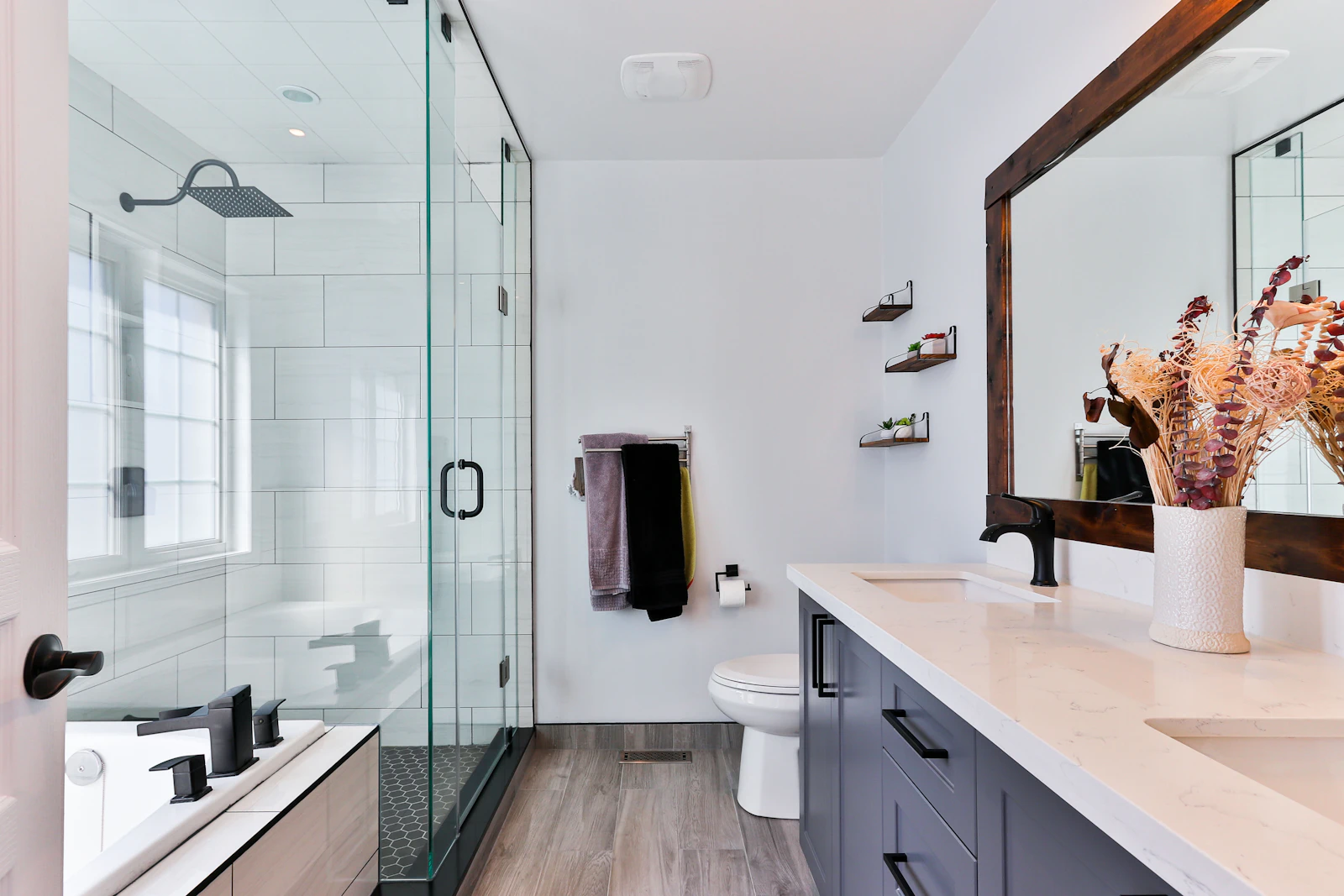
When a bathroom fails, people blame the tiles: a cracked tile, dark grout lines, a damp patch on the wall outside. But tiles are only the last few millimetres. What decides whether a bathroom lasts ten years or two is the build-up underneath, and you only get one chance to do it right.
This is the order a bathroom is built in, from the concrete slab up.
1. The base
Old tiles, adhesive and screed come off down to the slab. Loose areas are removed, cracks are repaired and the surface is cleaned. Anything built on a weak base inherits its problems.
2. Plumbing and drainage
Supply pipes and drains go in next, while everything is open. Drain pipes need a steady slope so water carries waste away instead of sitting in the pipe. Supply lines are pressure tested before they are closed in. A leak found now costs a fitting. A leak found after tiling costs the floor.
3. Electrical
Points for lights, mirrors, the extractor fan and any heated towel rail run inside the walls, away from the wettest zones, and are planned with the final layout so no wall needs cutting later.
4. Screed laid to a slope
The screed is the layer that sets the floor level. In a bathroom it is laid with a slight slope toward the drain, so water runs away instead of sitting in the corners. A perfectly flat bathroom floor is a mistake, not a finish.
5. Waterproofing membrane
This is the layer that does the real work. Corners and pipe openings are sealed with tape first, then the membrane goes on in full coats across the floor and up the walls in the shower zone. Once it has cured, the floor is filled with water and left to stand. If the water level drops, the leak is found and fixed before a single tile goes down.
6. Tiles, grout and sealant
Only now do the tiles go on, fully bedded in adhesive with no hollow spots. Grout fills the joints, and flexible sealant goes where the floor meets the wall and around fixtures, because those joints move. In showers, a grout that resists water and stains is worth paying for.
Grout and tile are not waterproof. They are the finish. The membrane under them is what keeps water in the room.
Why this takes time
Each layer needs time to dry or set before the next one goes on. That is a large part of why a typical bathroom renovation with us takes around 45 days. Bathrooms that leak within a year are usually the ones where those days were skipped.
Planning a bathroom? See how we handle bathroom renovation and waterproofing.